All posts tagged: Cantonese

Pork and prawn wontons

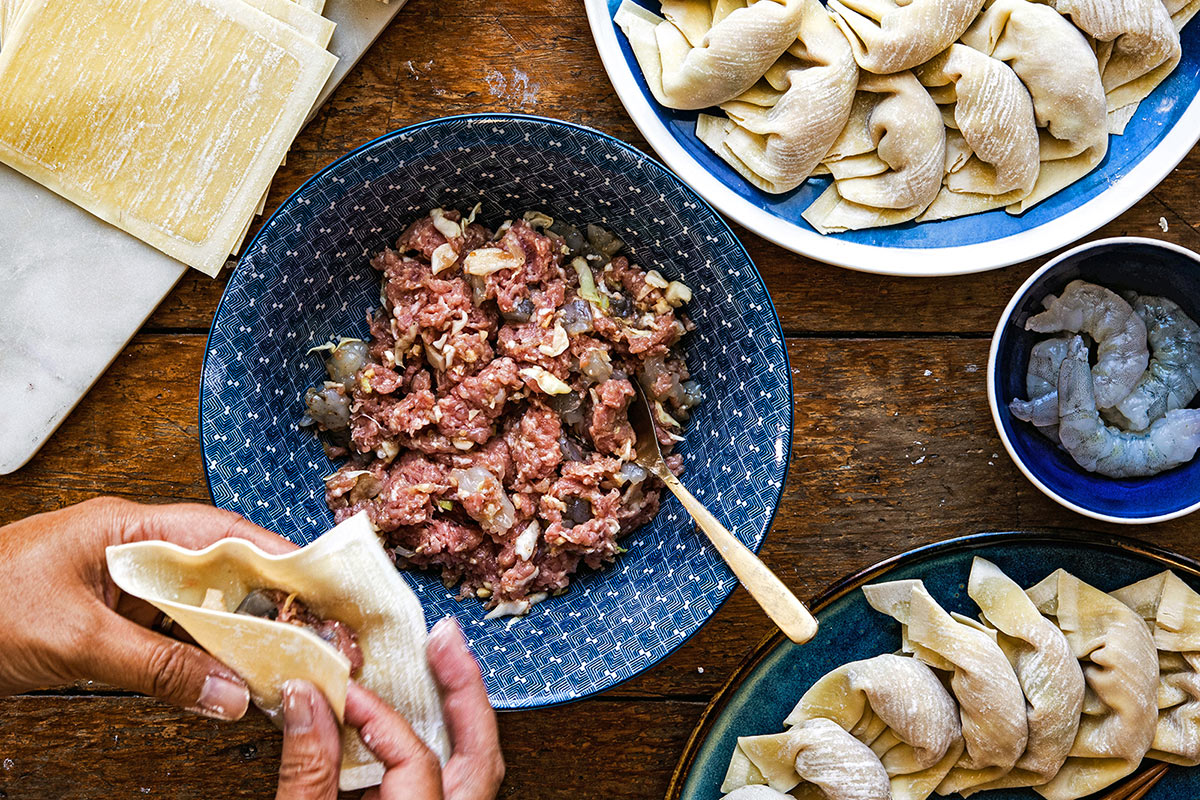
The wonton. The less glamorous sister to the dumpling. Wontons are my ultimate comfort food but I’ve served these a little different to how we ate them growing up. This recipe makes 50 wontons and freeze well. So enjoy some now and freeze the rest for later. Wonton wrappers often come in packs of 100 so just double the recipe, or freeze half the wrappers. If you want to make the full 100 wontons, you might want to employ an extra pair of hands or put on your favourite podcast and settle in. Pork and prawn wontons Makes 50 INGREDIENTS 500g (1 lb) pork mince 250g (1/2 lb) shelled prawns, chopped 1 cup finely chopped cabbage 2 cloves garlic, finely chopped 1 tablespoon fresh ginger, finely chopped 1 tablespoon light soy sauce 1 teaspoon sesame oil 1 teaspoon sugar 1/2 teaspoon ground white pepper 1/4 teaspoon five spice powder 50 wonton wrappers PREPARATION Place the filling ingredients together in a large bowl and mix well. Take 1 wonton wrapper and place a heaped teaspoon of filling …
“Shrimp grits” Congee

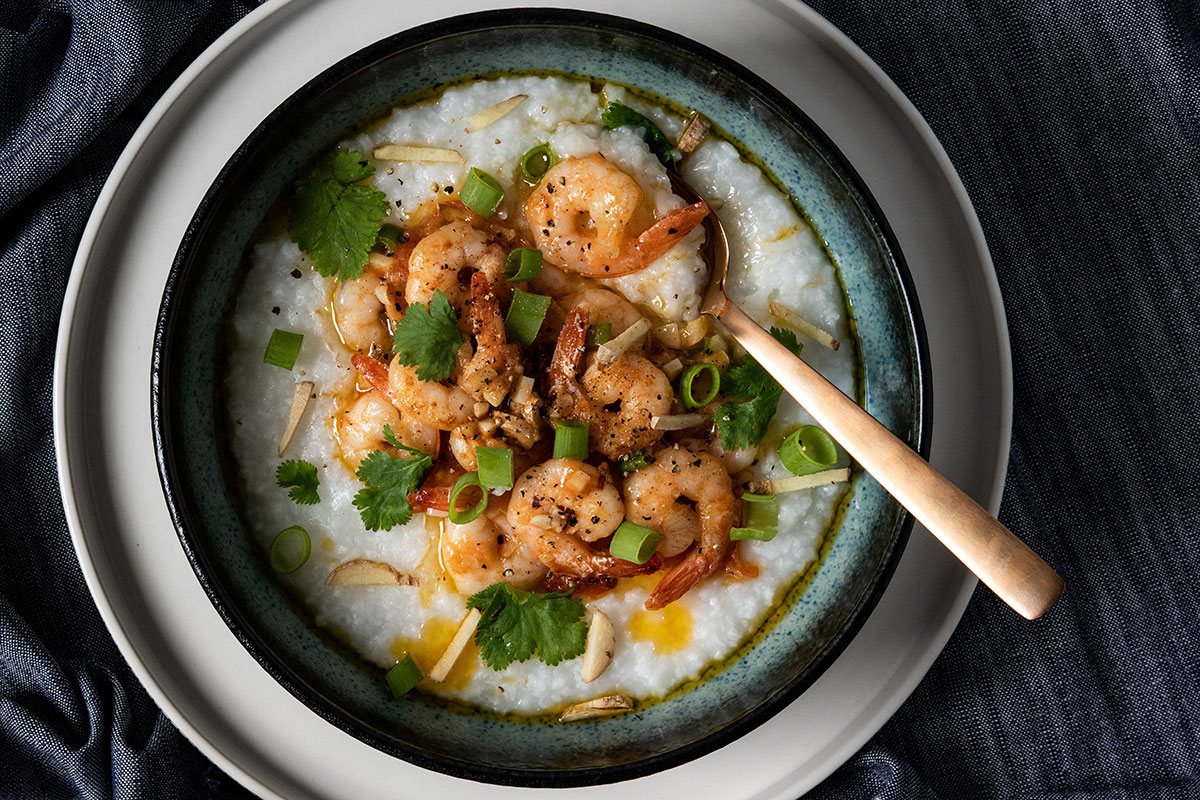
“Shrimp grits” congee 15 mins prep  |  45 mins cook Difficulty: Easy  | Serves 4 Ingredients 1 cup long grain rice, washed 3L water or stock 2 tablespoons butter 400g peeled prawns 5 cloves garlic, chopped 2 tomatoes, sliced A thumb size piece of ginger, cut into batons 1 spring onion, thinly sliced Optional: hot sauce Garnish: chopped coriander Preparation Place rice and water in a saucepan and bring to boil. Turn down to medium and partially cover with lid so that steam can escape and it doesn’t boil over. Cook for 30-45 minutes until the consistency of porridge. Stir every now and again to prevent grains sticking to the bottom of the pot. Add more water if the porridge is looking too thick. The congee is done when you can see that the individual rice grains have broken down into soft flakes. Season with salt to your taste, remove from heat and divide into serving bowls. While the congee is cooking, make the topping. Melt butter in a frying pan. Add the prawns, garlic, …

Dumpling wisdom from a retired dumpling professional

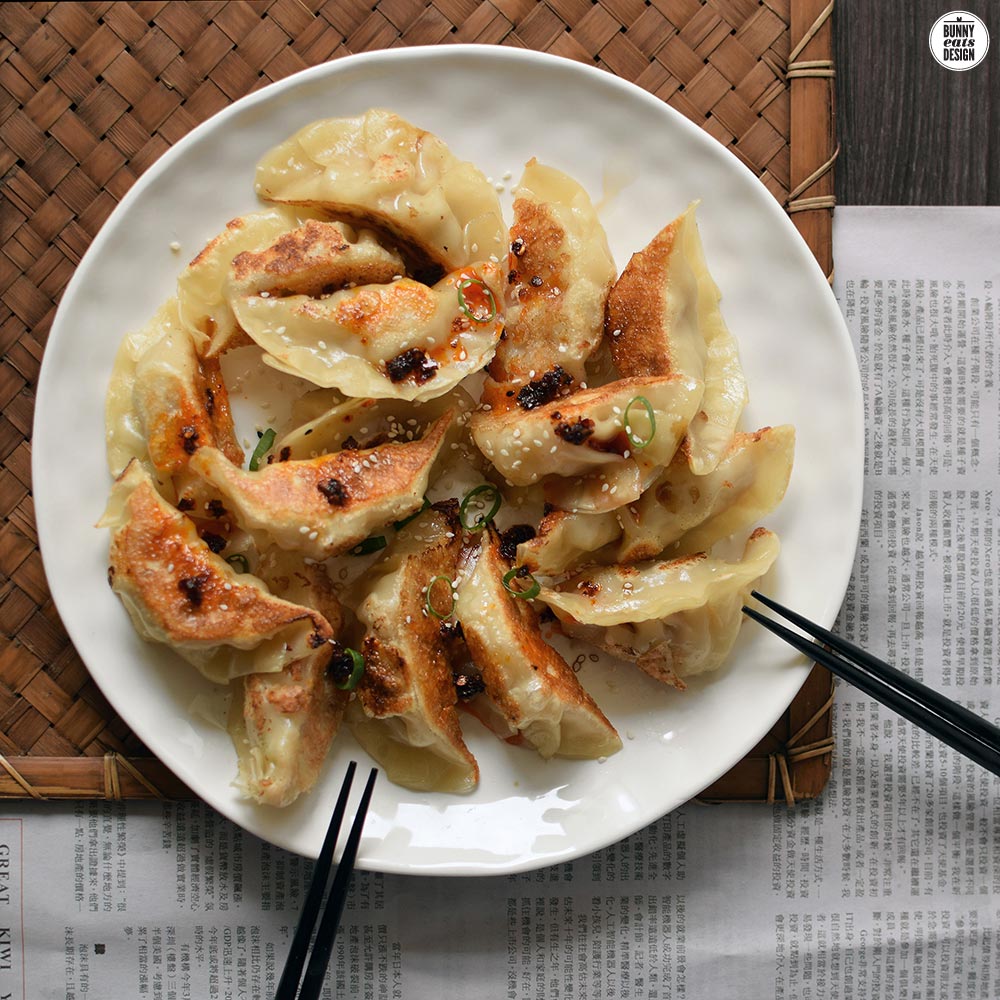
I am a lucky girl who grew up eating home made dumplings. The dumplings we ate were stuffed with pork mince with different variations. I asked my Mum what ingredients were in the dumplings of my childhood and this post is based around her answer. 12 years ago, back when I was still a hungry design student, I worked in our family’s Chinese take-out. Since I loved dumplings so much, I helped myself to dumplings at the start of every shift. Free dumplings is a (self-proclaimed) perk of working in the family business. Dad made the filling and wrapped a hundred dumplings ahead of time and the dumplings were cooked during service. One of my duties was cooking dumplings fresh to order. So while I can’t proclaim I was a professional dumpling wrapper, I did get paid to cook dumplings. This makes me somewhat of a retired dumpling professional (see pro tips at the bottom of this post). Fast forward 12 years, my love of dumplings has grown. I don’t cook dumplings for money anymore and my …

Crispy Roast Pork: Cantonese style

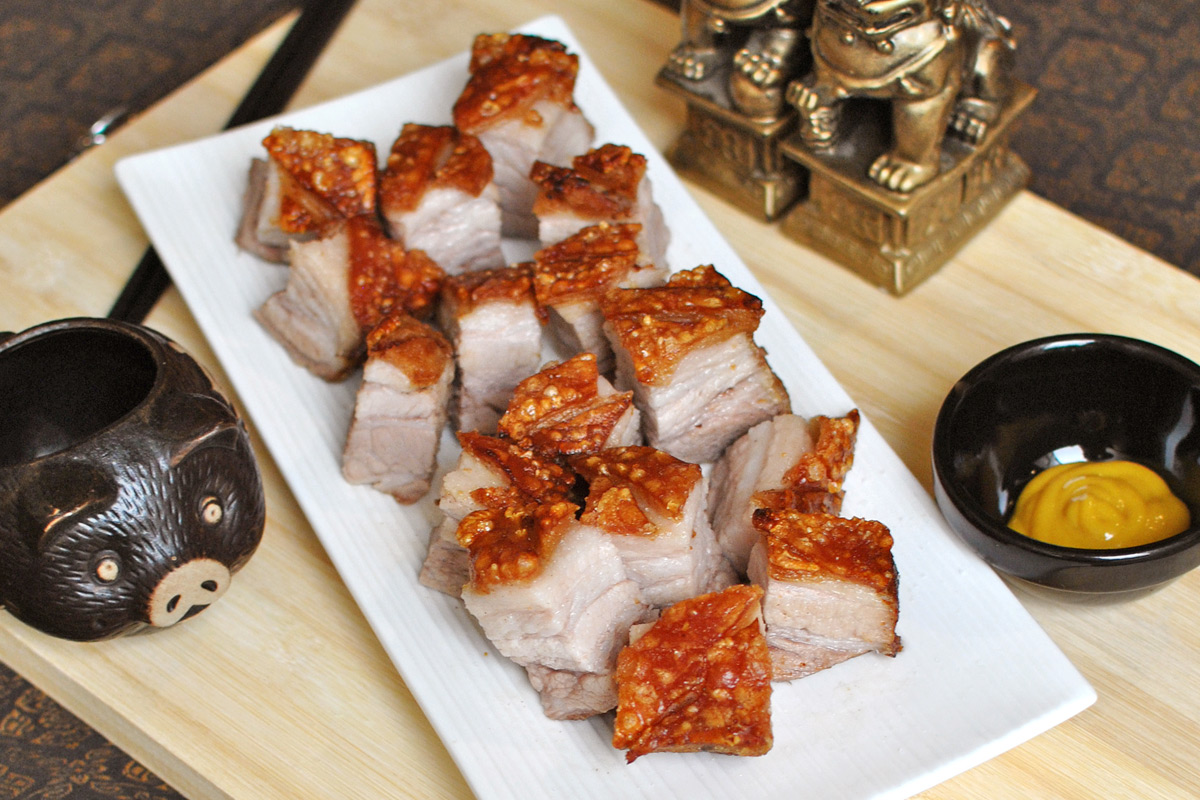
This post is part of Our Growing Edge, a monthly blogging event to encourage bloggers to try new food related things. Ash from Organic Ash is the host for this month’s event. If you have a blog and you are eating or cooking something new this month, click below to join. More information here. Crispy roast pork (siu yuk) can be found hanging among roast ducks and slabs of shiny red BBQ pork in the windows of Cantonese BBQ restaurants everywhere. Traditionally, pork is roasted with seasoning in a charcoal furnace and is served as an appetiser* with your choice of dipping sauce. Soy sauce and hoisin sauce are popular but I love it dipped in mustard. Served with a bowl of rice and some Chinese greens, it’s a simple and delicious dinner. It’s interesting to note that the words “siu yuk” directly translates to roast meat, not roast pork. I guess pork is so ubiquitous in Cantonese cuisine that meat equals pork by default. While I have made English-style roast pork on many occasions, I’d never considered cooking the …

Dried mushrooms and a recipe from my childhood

Like many Cantonese children, I grew up regularly eating what I we call Dong Gu. Dong Gu literally means “winter mushroom” and is also known as a Shiitake or Chinese Black Mushroom. Dried Shiitake mushrooms are used in various asian cuisines and are inexpensive, easy to use and if stored correctly, last a long time. Dried Shiitake mushrooms taste nothing like fresh Shiitake. Dried have an intensely savoury earthy flavour and the fresh stuff tastes weak in comparison. Do not substitute fresh for dried! My family always bring back a bag or two of dried mushrooms back from trips to Hong Kong, but New Zealand customs can be frightful to deal with so it’s not really recommended. Luckily, you can buy dried Shiitake at any Asian grocer these days, perhaps even at your general supermarket. Dried Mushrooms Tips: Once open, store mushrooms in the freezer. While they will last outside the freezer, they can inevitably attract moths and other nasties. No need to thaw before rehydrating as the lack of water means these don’t really …

Tale of two prawns: Steamed Garlic Prawns & Super Tasty Grilled Prawns

A thing or two about prawns Prawns in New Zealand are imported raw as we have no prawn fishery. They are snap frozen at sea and can be easily thawed at home, so never buy thawed prawns because you don’t know how long they have been thawed for. Maybe it’s only been a couple of hours, but maybe it’s longer. Why risk it? If they’re snap frozen at sea and you thaw them just prior to cooking, they will be as fresh as possible. Prawn size and weight If you have bought prawns before, you may have noticed a special numbering system in place. It seems counter-intuitive, but the smaller the number, the larger the prawn. Less is more! Well, less is big. U10 or U20 means under 10 or 20 prawns per kilo. These are the biggest prawns and also the most expensive. Handy guide to prawn sizes (per kilo) Extra large 10/20 also displayed as U10 or U20 Under 10 and Under 20 prawns per kilo Large 21/30 Under 30 prawns per kilo Medium …

Like a Chinese Paella

The other night, The Koala and I got takeaways from Love A Duck on Dominion Road. While waiting for our meals, I was pleased to see that during winter, they offer a range of claypot cooked dishes. Claypot Chicken Rice Claypot Chicken Rice is popular in Malaysia, Hong Kong and Singapore. For those not familiar with this style of cooking, rice, chicken and various sauces and flavoursome ingredients are cooked in a claypot. The rice sticks to the bottom resulting in a fragrant, delicious mess like a Chinese version of paella. Chicken Can’t have this dish without the hardcore marinated chicken. Cantonese love bones and I always make this with chicken wings but you could use boneless thigh or breast to make this a kid friendly dish. Lap Cheong Chinese dried sausages or Lap Cheong are dry cured sausages normally made of pork and fat. These are smoked, sweetened, seasoned and taste like awesome. The sausages I buy from my local are vacuum packed and hail from Canada. You might like these if you like streaky …

The Secret World of Private Kitchens in Hong Kong

Before our super epic trip, I’d mentioned to my cousin Charing that I wanted to dine at a private kitchen. From Wiki: Speakeasy, also termed private kitchen in Hong Kong (Chinese: 私房菜), is a term in modern Hong Kong referring to an unlicensed, restaurant-like establishment for eating. Some of the perceived problems with running a restaurant in Hong Kong—high rents and the common practice of landlords extracting profits from restaurants through clauses in tenancy agreements—have led to the establishment of this type of eatery. Owners also have the additional benefit that many government regulations concerning restaurants can be avoided. A typical speakeasy will be based in an ordinary apartment in a block of flats. Customers gain access by ringing the bell before the door is opened from the inside. Inside, the flat will be set out as a simple restaurant. Usually, it provides not only quality home-made food and drink, but a sense of being at home. Advertising is usually by word of mouth—it’s often not possible to have prominent signs outside to advertise the business’ presence, as with a normal commercial establishment. She knew …